This month marks the 12th anniversary of the canonization of Marianne Cope, whose loving and sacrificial care for people affected by leprosy on the Hawaiian island of Molokai led to her being known as St Marianne of Molokai.
“At a time when little could be done for those suffering from this terrible disease, Marianne Cope showed the highest love, courage and enthusiasm. She is a shining, energetic example of the spirit of her beloved Saint Francis,” Pope Benedict XVI wrote of the canonization of St. Marianne Cope of Molokai on October 21, 2012.
More than 50 religious congregations in the US had already declined a request from Hawaii’s King Kalakaua for Sisters to care for leprosy patients because the disease was considered to be highly contagious. But when the German-born American religious sister received a letter from the Hawaiian King asking for sisters to care for people affected by leprosy, she responded enthusiastically to the letter:
“I am hungry for the work and I wish with all my heart to be one of the chosen Ones, whose privilege it will be, to sacrifice themselves … I am not afraid of any disease.“
Marianne, then aged 45, had just become the second Mother Provincial of her Order in Syracuse, New York, and initially she intended to return to that role. However, she spent the last 30 years of her life in Hawaii.
Mother Marianne, with six other Franciscan sisters, arrived in Honolulu to a royal welcome on November 8, 1883. Within months, Mother Marianne took leadership of the Kakaako Branch Hospital for leprosy patients, established Maui’s first general hospital and co-founded the Kapiolani Home for orphan girls. She and her sisters also oversaw St Anthony School in Wailuku, Maui. These institutions became open to everyone, regardless of race, color and creed.
After five years managing a hospital in Honolulu, Marianne volunteered to go to Molokai, a rugged island where more than a thousand people had been exiled to spend the rest of their days on an isolated settlement on the Kalaupapa peninsula, cut off from their families and communities.
She arrived at Kalaupapa with two of her sisters in November 1888 – just months before the death of Belgian priest Damien De Veuster, who had contracted leprosy after years of providing medical and emotional support to the community. With her two youthful assistants, she consoled the ailing priest on his deathbed by assuring him that she would continue the work he started for which he was known internationally. She also made a bold promise to her sisters that that none of them would contract the disease.
From the outset, Mother Marianne instigated cleanliness protocols such as frequent handwashing to protect herself and her Franciscan sisters from leprosy. By such measures, she and her sisters spent decades ministering to the emotional and physical needs of the people at close quarters without becoming infected.
After Father Damien’s death, Marianne took charge of the refuge he had built for boys, in addition to her role of caring for the colony’s female residents. According to witnesses, Molokai was like a combination of a graveyard and a prison at the time, with harsh living conditions that were considered intolerable for women. Mother Marianne, Sister Vincent McCormick, and Sister Leopoldina Burns showed unwavering faith and courage in bringing hope and the joy of God’s love to this desolate place. They restored dignity and beauty, encouraging dresses to be sewn in the latest fashions and planting flower gardens and fruit trees.
Marianne was about 50 years old when her mission at Molokai began and she died at age 80 on August 9, 1918, from kidney and heart disease and was buried on Molokai.
At her death, a Honolulu newspaper wrote: “Seldom has the opportunity come to a woman to devote every hour of 30 years to the mothering of people isolated by law from the rest of the world. She risked her own life all that time, faced everything with unflinching courage, and was known for her gentle smile.”
Marianne herself sought no acclaim. “What little good we can do in this world to help and comfort the suffering, we wish to do it quietly and so far as possible, unnoticed and unknown,” she said. “We rejoice we are unworthy agents of our Heavenly Father through whom he designs to show his great love and mercy.”
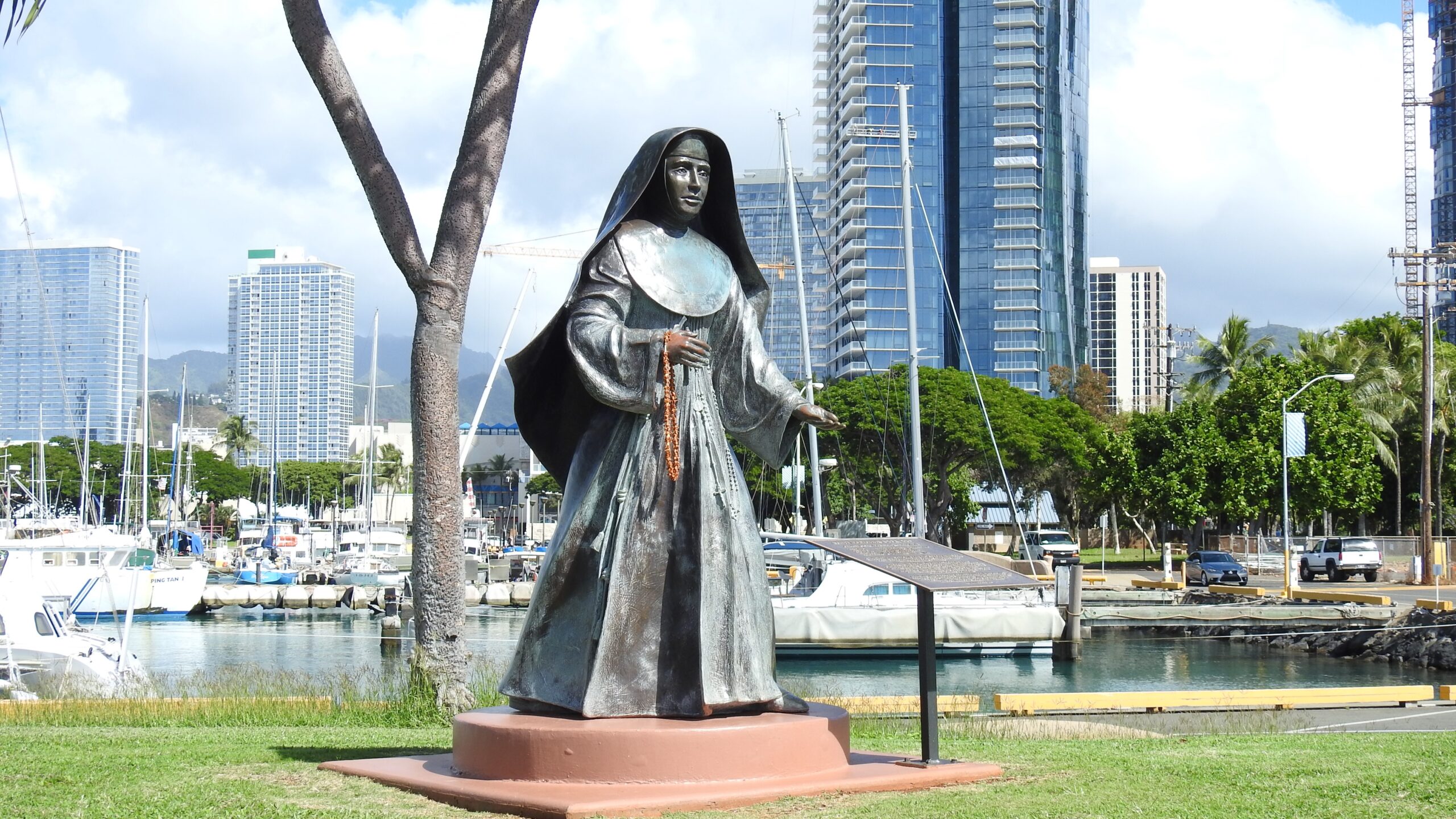
Today, a statue of St Marianne stands in Kewalo Basin in Honolulu. Her outstretched hand pointing toward Molokai symbolises her unwavering love and service. Families, homeless people, surfers, and tourists share the park, connected by the aloha she left behind.
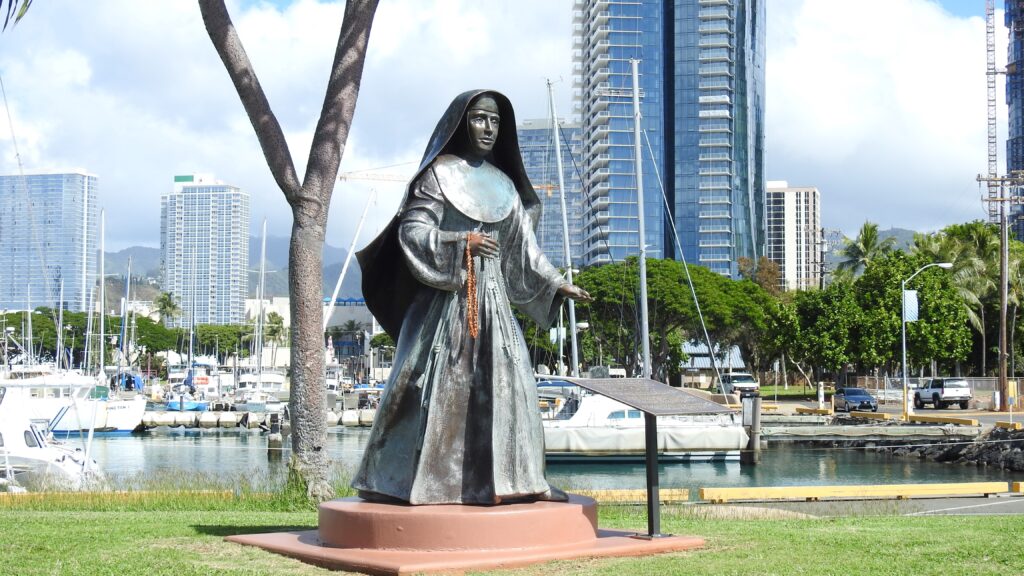
PHOTO: Daniel Ramirez, CC BY 2.0, via Wikimedia Commons


Subscribe to our newsletter and keep up-to-date with Leprosy Mission Australia
By clicking Subscribe you're confirming that you agree with our Terms and Conditions